Terroir can sound mysterious. In practice, it asks a concrete question: how do place, weather, grape growing, and human choices meet in one wine? Champagne gives us a vivid answer.
Start with the chalk
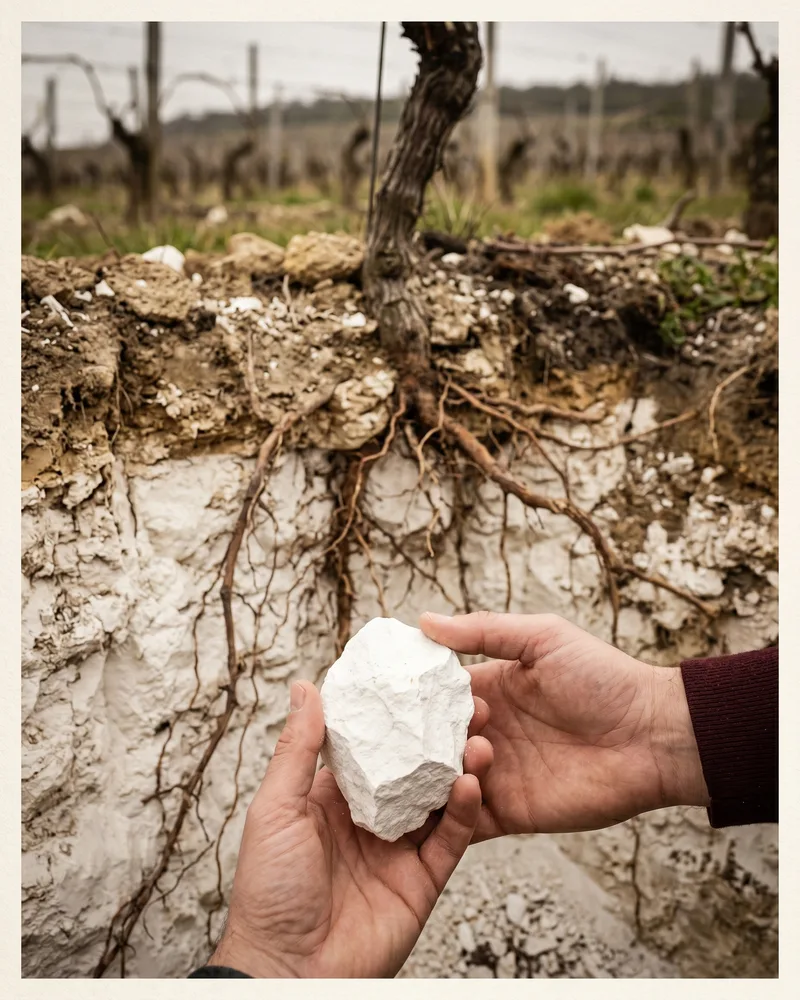
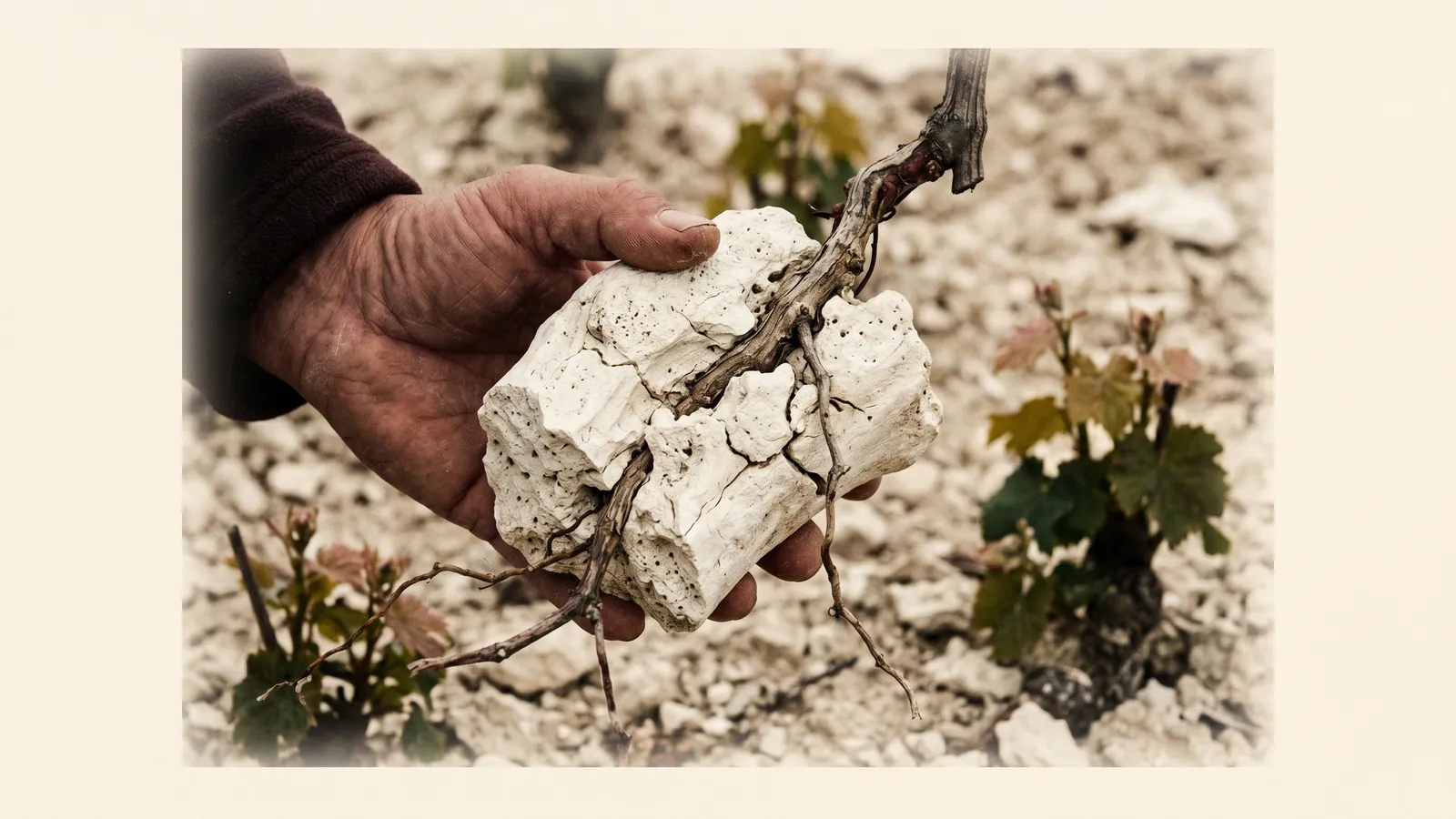
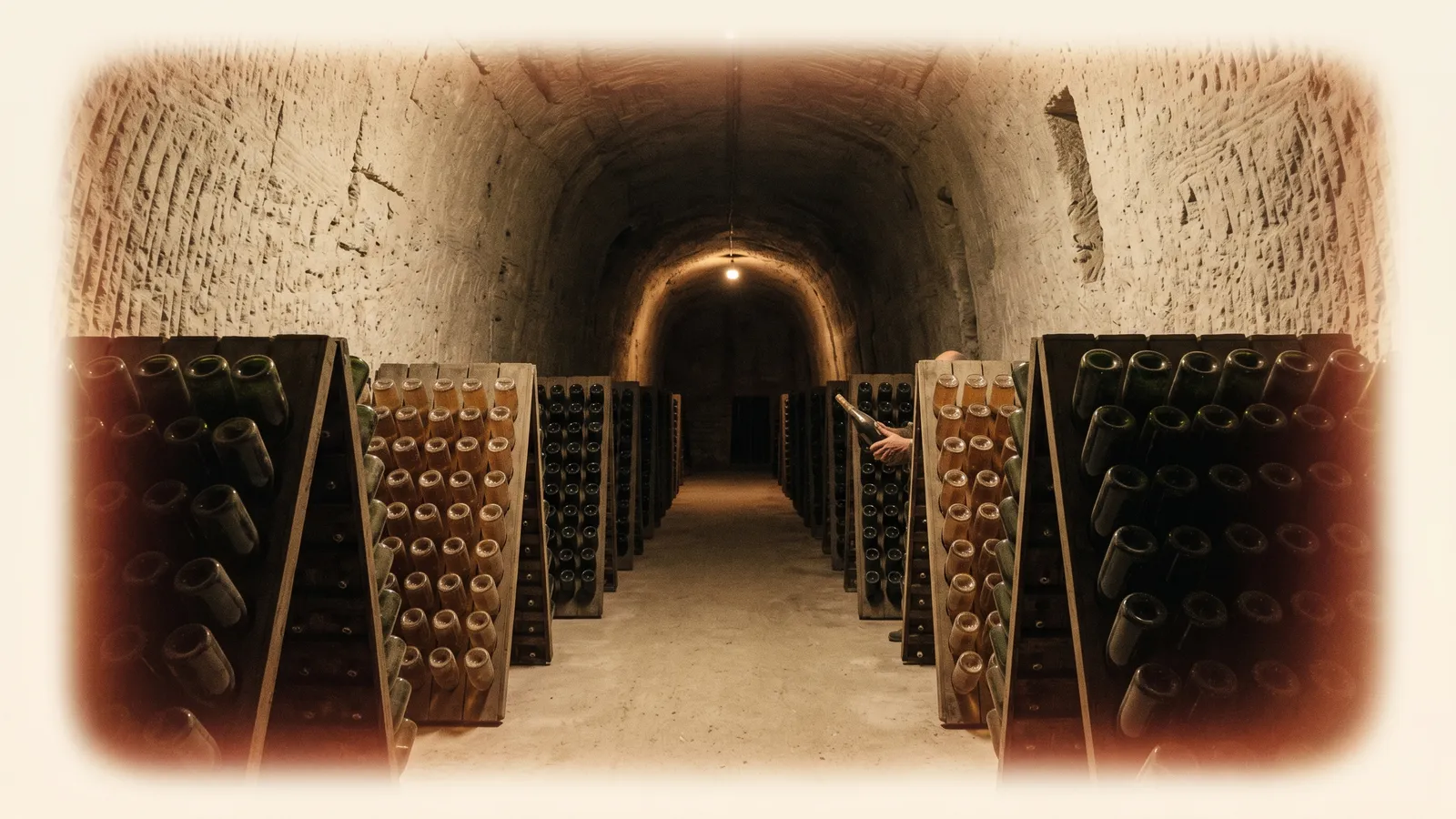
Much of Champagne rests on chalk-rich subsoil formed from an ancient marine environment. Chalk can store water and drain freely, helping vines through changing conditions. It also made it possible to carve the cool underground cellars, or crayères, found around Reims.
You may hear a Champagne described as chalky, stony, or saline. Those are useful tasting images, but they are not dissolved soil arriving unchanged in the glass. Acidity, fruit ripeness, winemaking, ageing, and expectation all shape what you perceive.
A cool-climate starting point
Champagne lies near the northern edge of France's traditional wine-growing zone. The cool climate historically helped grapes retain the high acidity needed for sparkling wine. Warmer years, site, harvest date, and grape variety can all shift that balance, so “Champagne is high-acid” is a tendency, not the whole story.
The three main varieties are **Chardonnay**, **Pinot Noir**, and **Meunier**. Chardonnay often contributes citrus and finesse; Pinot Noir can add structure and red-fruit depth; Meunier commonly brings supple fruit. They dominate the region, but they are not the only varieties authorised in the appellation. A cellar master may blend grapes, villages, plots, or years to build a particular style.
Time in the cellar
The bubbles come from a second fermentation in the bottle. The wine then matures on its lees: spent yeast cells slowly break down through autolysis, while tiny exchanges of gas also influence development. With time, a wine may gain creamy texture and aromas that suggest bread, biscuit, toast, or nuts.
Champagne's official rules require at least 15 months of cellar maturation before release and at least three years for vintage Champagne. Many producers choose longer.
Put the pieces together
Champagne is not explained by chalk alone, nor by bubbles alone. Its character grows from a cool-climate vineyard, permitted grapes, blending decisions, bottle fermentation, lees ageing, and the choices of growers and cellar teams.
That is a practical way to understand terroir: not magic dust from the soil, but a place interpreted through farming, craft, and time.
Next time you taste Champagne, follow three clues: the freshness of the base wine, the fruit and structure of the blend, and the savoury notes that point to time on lees. You are tasting a process as much as a place.