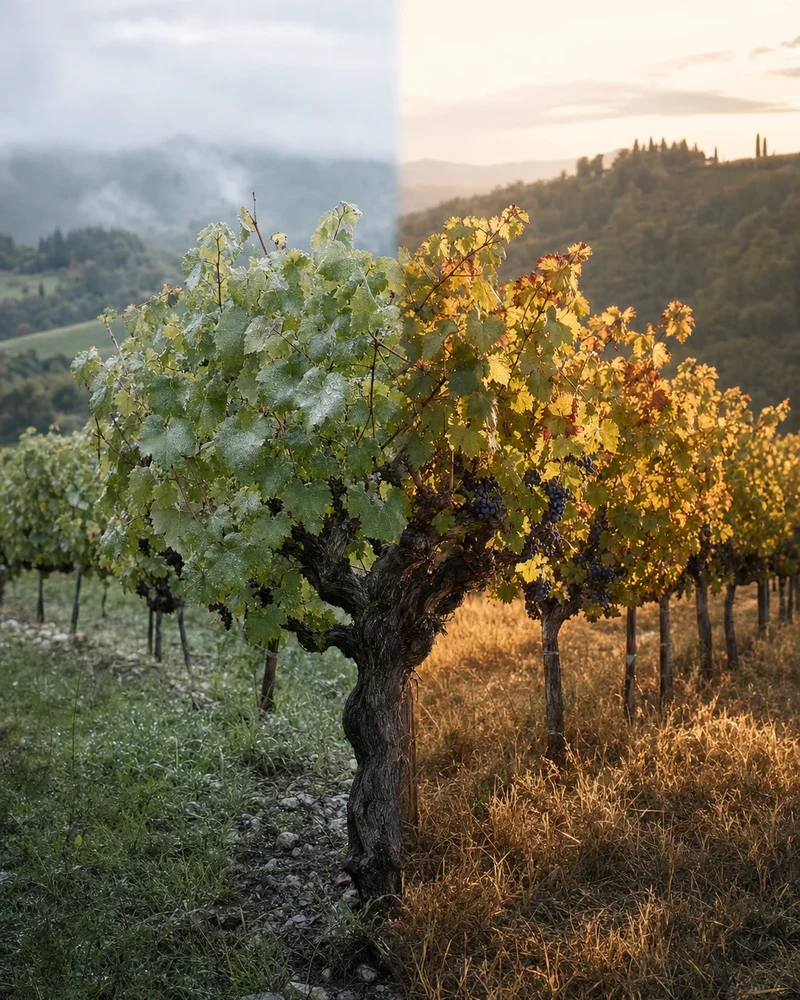
A vintage is a growing season with a date attached. It records the year the grapes were harvested — but the interesting part is everything that happened before they reached the cellar.
Imagine returning to the same vineyard in two different years. One summer is warm and dry, so harvest arrives early with generous, ripe fruit. The next is cooler and unsettled, demanding patience and careful selection. The place has not moved. The grape has not changed. Yet the wines may tell noticeably different stories.
Same place, different year
Weather influences how grapes develop through the season. Sunshine and warmth help build sugar and flavour. Cool conditions can slow ripening and help preserve acidity. Rain may relieve water stress at one moment and increase disease pressure or dilute fruit at another. Frost, hail, heat spikes, and the timing of each event can alter both yield and composition.
That does not give us a simple formula. “Warm” is not another word for “good,” and “cool” does not mean “bad.” Too much heat can rush ripening, reduce freshness, or sunburn grapes. A cool season can produce slender, aromatic wines when the fruit reaches suitable ripeness — or struggle if it does not. Site, farming, harvest date, and cellar decisions all shape the result.
Think in tendencies:
- A warmer season may lean toward riper fruit, fuller body, more potential alcohol, and softer-feeling acidity.
- A cooler season may lean toward brighter acidity, lighter body, and fresher or more herbal flavours.
- A balanced, dry harvest can improve consistency, while poorly timed rain can make selection especially important.
These are starting clues, not tasting-note guarantees.
Wine & Spirit Education Trust’s vintage primer offers a useful next look at how the timing of heat, rain, frost, and other weather events can influence a harvest.
Style comes before the score
Vintage discussions often collapse two questions into one: What style did the year encourage? and How good are the wines?
They are related, but they are not identical. A powerful, concentrated year may suit someone looking for structure and cellar potential. Another drinker may prefer the perfume and freshness of a lighter year. A lower-scoring vintage can still contain beautiful bottles, especially from well-placed vineyards and careful producers.
Quality is also style-specific. The useful question is not whether the weather was ideal in the abstract. It is whether growers could harvest healthy grapes at the right ripeness for the wine they wanted to make.
One year, different winners
Even within one region, grape varieties do not respond in lockstep. They ripen at different speeds and have different sensitivities to heat, rain, and disease. A season that flatters one variety can challenge another.
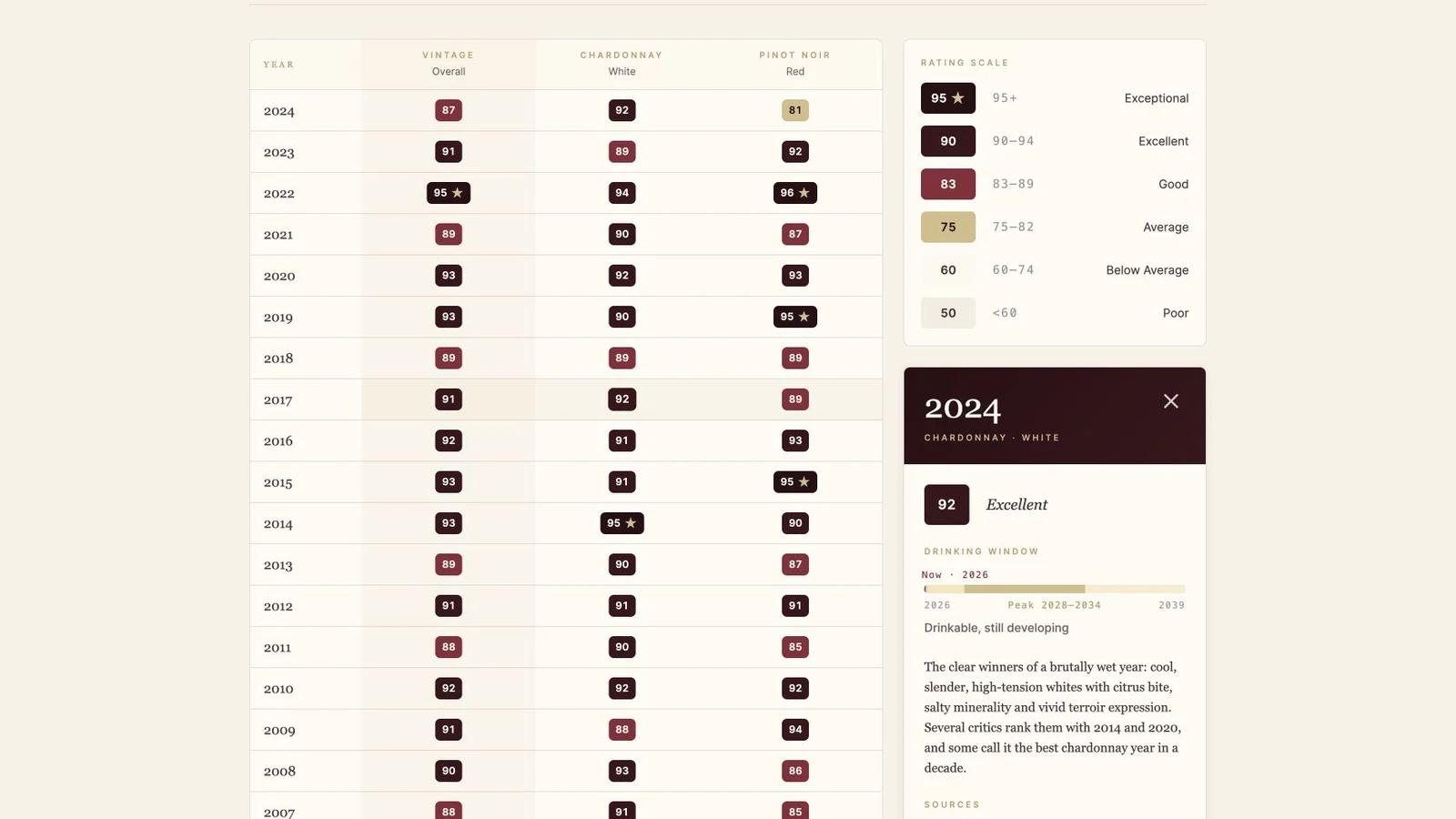
Burgundy makes this visible. In Wine Companion’s current chart, 2024 Chardonnay is rated 92, while 2024 Pinot Noir is rated 81. For 2023, the pattern turns: Chardonnay sits at 89 and Pinot Noir at 92. The regional name and calendar year are the same, but the grape changes the answer.
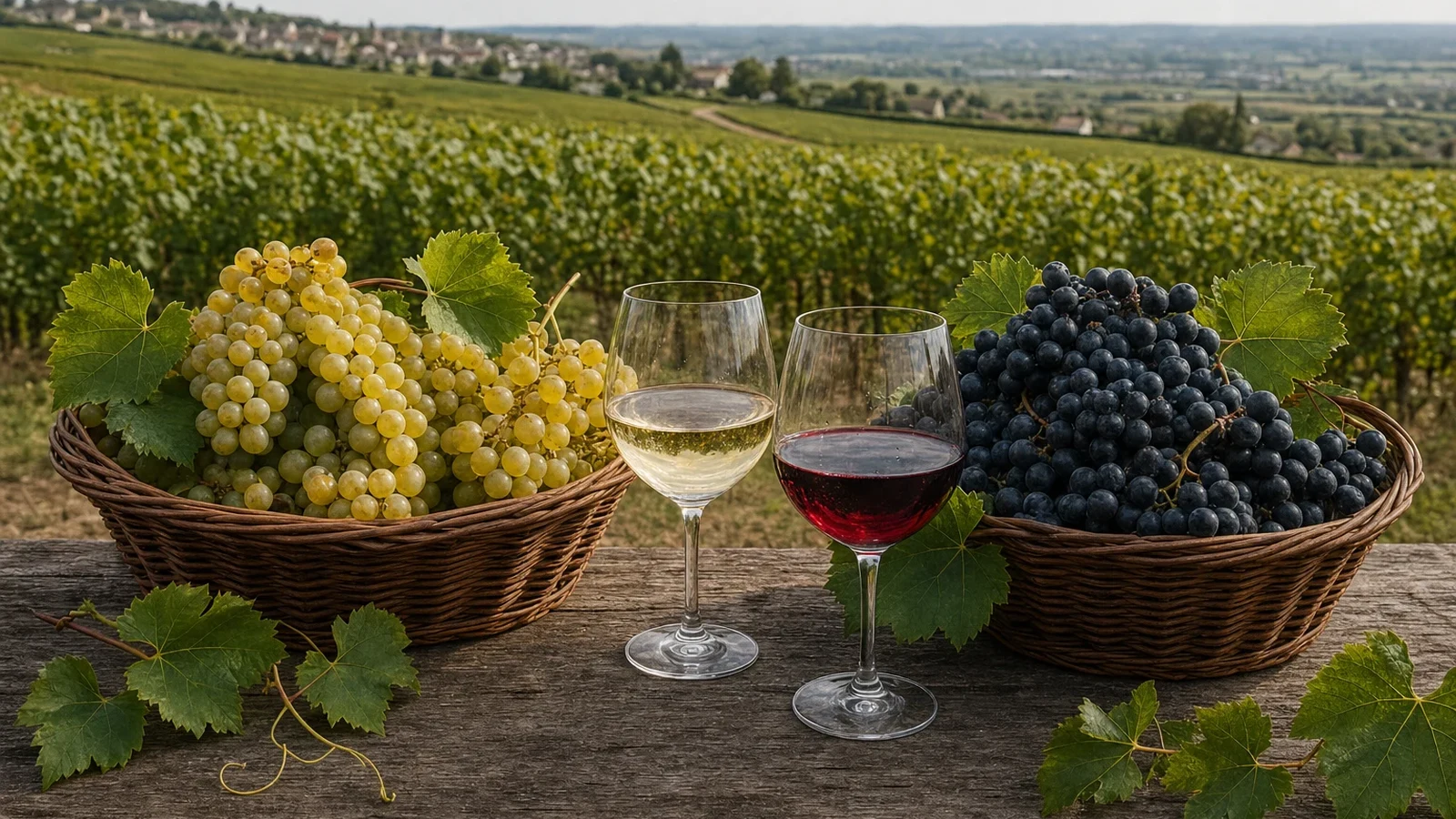
The same principle applies to styles. A year may favour dry whites over reds, or create excellent sweet wine when autumn conditions encourage noble rot. “Was it a good vintage?” becomes much more useful when you add: for which grape, style, and place?
A compass, not a verdict
A vintage chart summarizes a region or category. It cannot taste the individual bottle in front of you.
A sheltered slope may escape weather that affects the valley floor. An experienced grower may sort ruthlessly after rain. One producer may harvest early for freshness while another waits for greater ripeness. Bottle age and storage then add another chapter.
Use the vintage as context, alongside the producer, site, grape or blend, and bottle condition. The broader rating tells you what the season made possible and how consistent the results may be. It does not erase the people and places inside that average.
Put the Vintage Chart to work
Wine Companion’s Vintage Chart turns that context into a practical research tool:
- Choose the region on the bottle. Start as precisely as the chart allows.
- Scan across years to see whether the region was consistent or variable.
- Compare the overall rating with the grape and style columns. This is where different winners appear.
- Open a rating for the vintage story, drinking window, and underlying sources.
- Turn the number into a useful expectation. Are you likely to meet a fresh, early-drinking wine or something more structured and patient?
A score is the beginning of the conversation. The note explains the season; the drinking window helps with timing; the sources let you see the evidence behind the summary.
Next time two bottles share a producer and vineyard but carry different years, taste them side by side. Ask what changed in the fruit, freshness, structure, and readiness. That is vintage variation in its most memorable form.