Every sparkling wine begins with the same small piece of chemistry: carbon dioxide dissolves into wine under pressure. Open the bottle, lower the pressure, and the gas forms bubbles on its way out.
The interesting part is how the carbon dioxide arrived. It may come from a second fermentation in the bottle, a second fermentation in a tank, a first fermentation that finishes after bottling, or gas added directly to still wine. Those routes shape production time, lees contact, texture, aroma, and price.
Method is not a simple quality ladder. It is a clue to the style the producer chose to build.
1. The second fermentation happens in this bottle
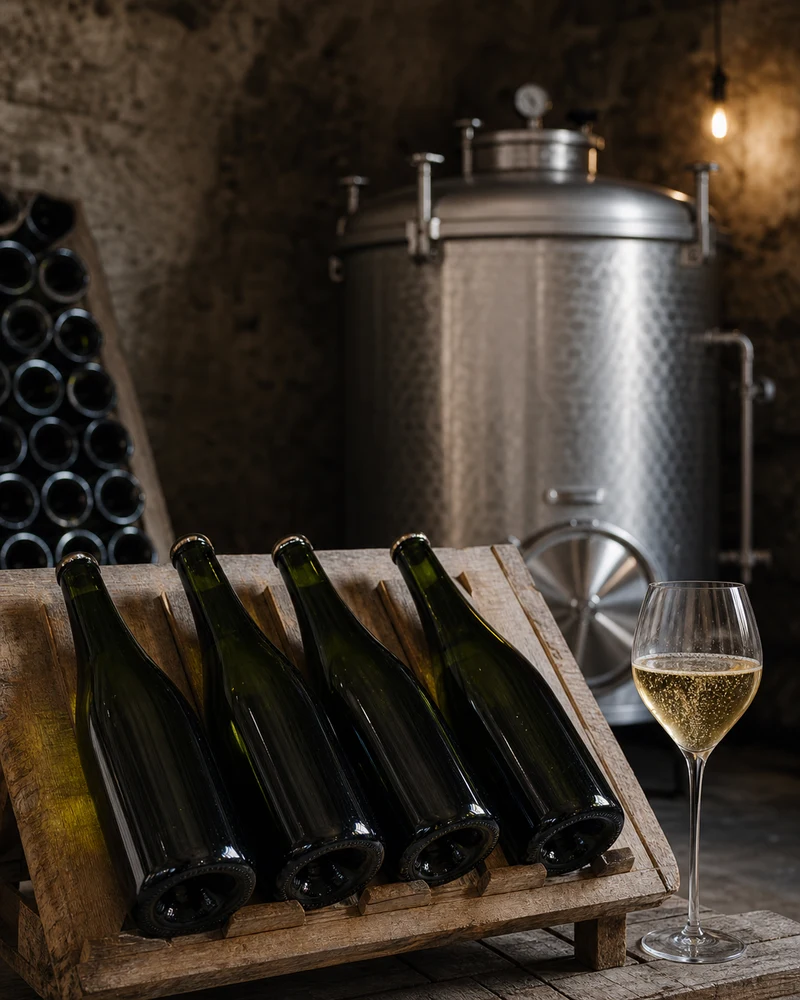
In the traditional method, a dry still base wine receives yeast and sugar before the bottle is sealed. Fermentation produces a little more alcohol and carbon dioxide. Because the gas cannot escape, it dissolves into the wine.
When fermentation ends, the spent yeast forms lees. Time on those lees can build creamy texture and aromas that suggest bread dough, biscuit, pastry, or nuts. The bottles are gradually riddled so the sediment gathers in the neck, then disgorged to remove it. Dosage may adjust the final balance before the bottle is closed again.
This route is used for Champagne, Cava, Crémant, Franciacorta, Cap Classique, and many other wines, but the regional rules, grapes, and minimum ageing periods differ. The method explains part of the style; it does not make every bottle taste alike.
WSET’s traditional-method guide walks through the bottle’s journey from base wine to disgorgement.
2. The second fermentation happens in a tank
The tank method, also called Charmat or Martinotti, starts with the same basic idea but moves the second fermentation into a sealed pressure tank.
The wine can be filtered and bottled under pressure as one batch. That removes the bottle-by-bottle work of riddling and disgorgement and often shortens production. Brief lees contact keeps attention on fresh fruit and flowers rather than long autolytic development.
Prosecco is the best-known example, though tank-fermented sparkling wine is made in many regions and from many grapes. The method is especially useful when the producer wants to protect an aromatic, youthful profile.
“Tank” does not mean careless. Temperature, pressure, timing, base-wine quality, and blending still matter. It simply gives the winemaker a different set of tools.
3. The first fermentation finishes in the bottle
The ancestral method takes another route. Instead of making a still wine and starting a second fermentation, the producer bottles wine before its first fermentation has finished. The remaining sugar continues to ferment in the sealed bottle and traps carbon dioxide.
Modern pét-nat often follows this broad pattern. Some wines remain cloudy because their lees stay in the bottle; others are disgorged or filtered. Pressure can be gentler, and the style may feel lively, fruit-forward, or yeasty—but “ancestral” does not guarantee a particular flavour, farming philosophy, or level of sweetness.
Timing is demanding. Bottle too early and pressure may climb too high; bottle too late and the wine may barely sparkle. What looks rustic can require careful judgement.
4. Carbon dioxide is added directly
With direct carbonation, a producer chills still wine and dissolves carbon dioxide into it under pressure. There is no second fermentation and no lees ageing created by the process.
It is fast and practical. The base wine keeps its existing aroma profile while gaining fizz. This route commonly serves simple, youthful sparkling styles where freshness and accessibility matter more than fermentation-derived complexity.
Direct carbonation is not a fake version of another method when it is presented honestly. It is a different production choice. Regional appellations may restrict which methods can use their names, so the label and local rules remain important.
Taste the route, not a myth
Bubble size alone cannot reliably identify the method or quality. Glass cleanliness, serving temperature, pressure, dissolved compounds, and time after pouring all influence what you see.
Look for a wider pattern instead:
- Fresh fruit and flowers in the foreground may fit a shorter tank process.
- Bread, biscuit, and a creamier middle may point toward meaningful lees ageing.
- A lightly cloudy, lively profile may fit an ancestral-method wine, though clarity varies.
- Straightforward fruit plus brisk fizz may suit direct carbonation.
These are clues, not verdicts. Grapes, place, base-wine quality, sweetness, and ageing continue the story.
The next time you hear a cork release, ask one extra question: Where did the bubbles form? The answer turns a festive sound into a map of the cellar.
Four routes can all lead to sparkle. What changes is the journey—and the style the journey makes possible.