“Red with meat, white with fish” is easy to remember and easy to outgrow. A better approach is to notice a few forces in the glass and on the plate, then decide whether you want harmony or contrast.
Read the wine and the dish
In wine, pay attention to acidity, tannin, sweetness, alcohol, body, and flavour intensity. In food, look for fat, salt, acidity, sweetness, heat, bitterness, and umami.
None of these elements works alone. A tomato sauce may be acidic, sweet, salty, and rich at once. Your job is not to solve an equation; it is to spot the loudest features.
1. Start with weight
A delicate wine can disappear beside a dense stew. A powerful, high-alcohol wine can flatten a subtle dish. Matching overall intensity gives both room to speak.
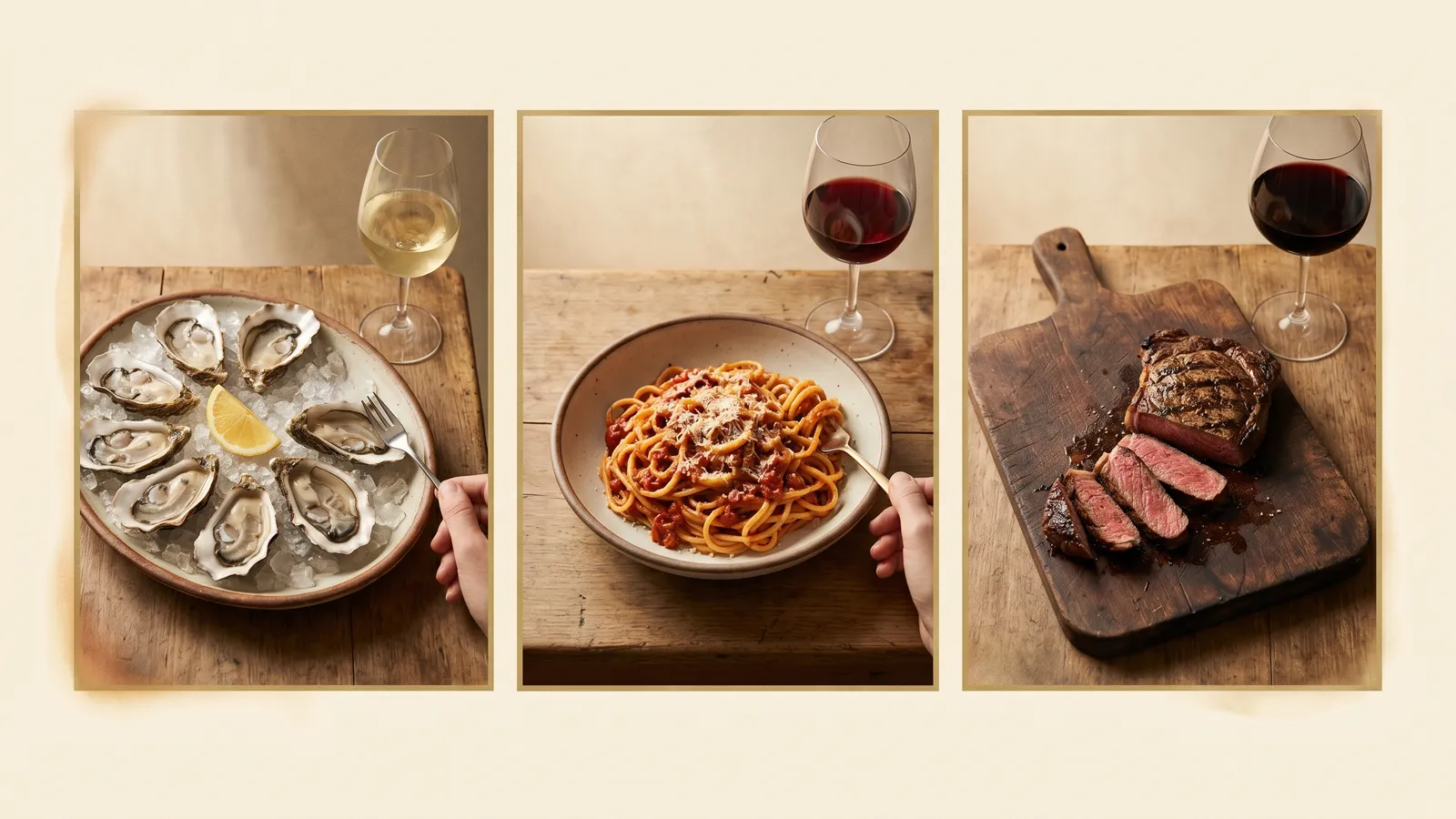
- Muscadet and oysters: light meets light.
- Chianti and tomato pasta: medium weight, lively acidity, similar intensity.
- A structured red and braised beef: fuller meets fuller.
This is a starting point, not a law. A bright, light wine can also refresh a rich dish through contrast.
2. Use acidity as refreshment
Acidity makes your mouth water. That is why a fresh wine can feel so good with fried, creamy, or fatty food: each sip resets the palate. The wine usually needs enough acidity to stand beside acidic ingredients such as tomato, citrus, or vinegar; otherwise it may taste softer and flatter than it did alone.
Try Sauvignon Blanc with goat cheese, Barbera with tomato sauce, or sparkling wine with fried food. The common thread is freshness, not a promise that every bottle will work.
3. Treat tannin with care
Tannin creates a drying sensation by interacting with proteins in your saliva. Protein-rich and fatty foods can make that grip feel less severe, which helps explain the classic appeal of Cabernet Sauvignon with steak.
But cooking method, sauce, salt, and the wine's alcohol matter too. Delicate fish can taste metallic beside some tannic reds, while richer fish or earthy preparations can work well with a light, low-tannin red.
4. Give heat and sweetness some space
Chilli heat can make alcohol feel hotter and tannin more bitter. A lower-alcohol wine with a little sweetness often softens that effect. Off-dry Riesling is a reliable experiment, not the only possible answer.
With dessert, choose a wine at least as sweet as the dish if you want the wine to retain its fruit and balance. Salt can create a lovely counterpoint to sweetness — think blue cheese with a sweet wine.
5. Watch umami and bitterness
Umami-rich foods can make tannin feel firmer and fruit seem quieter. Add salt or acidity, or choose a wine with modest tannin. Bitter foods can amplify bitterness in wine, so freshness and fruit are often kinder partners than heavy extraction.
Build your own pairing
Ask three questions:
- What is the dish's strongest feature?
- Does the wine have enough intensity and freshness?
- Do I want to echo the dish or create contrast?
Then taste. If the pairing makes the wine harsher, sweeter, flatter, or hotter, you have learned something useful. Change one variable next time.
Personal pleasure outranks the rulebook. The principles simply help you predict what may happen — and explain why an unexpected pairing works for you.