Wine Companion
The quiet revolution of skin-contact whites.
Method

The quiet revolution of skin-contact whites.

9 min read · Wine Companion

Somewhere between white wine and red, there's a colour that has no official name. Winemakers call it orange. Amber. Skin-contact. Whatever the label, the liquid in the glass ranges from pale copper to deep marmalade, and it tastes like nothing else in the wine world.

What white wine forgets

To understand orange wine, you first need to understand what white wine leaves behind.

When you make a conventional white, you press the grapes immediately and discard the skins. The juice ferments alone — clean, pale, protected from oxygen. The result is fresh, fruity, predictable. This is how most white wine has been made since the mid-twentieth century, when temperature-controlled stainless steel tanks made it easy to produce crisp, stable wines anywhere on earth.

But for thousands of years before that, white grapes were treated the same way as red ones: crushed, left in contact with their skins, fermented in clay or wood. The skins gave the wine colour, texture, tannin, and a complexity that modern winemaking deliberately strips away.

Orange wine is, in a sense, the oldest style of wine on the planet pretending to be the newest.

Georgia and the 8,000-year-old idea

The birthplace of skin-contact white wine is Georgia — the country, wedged between the Black Sea and the Caucasus Mountains. Georgian winemakers have been fermenting white grapes with their skins in buried clay vessels called qvevri for at least eight millennia. This isn't a trend for them. It's Tuesday.

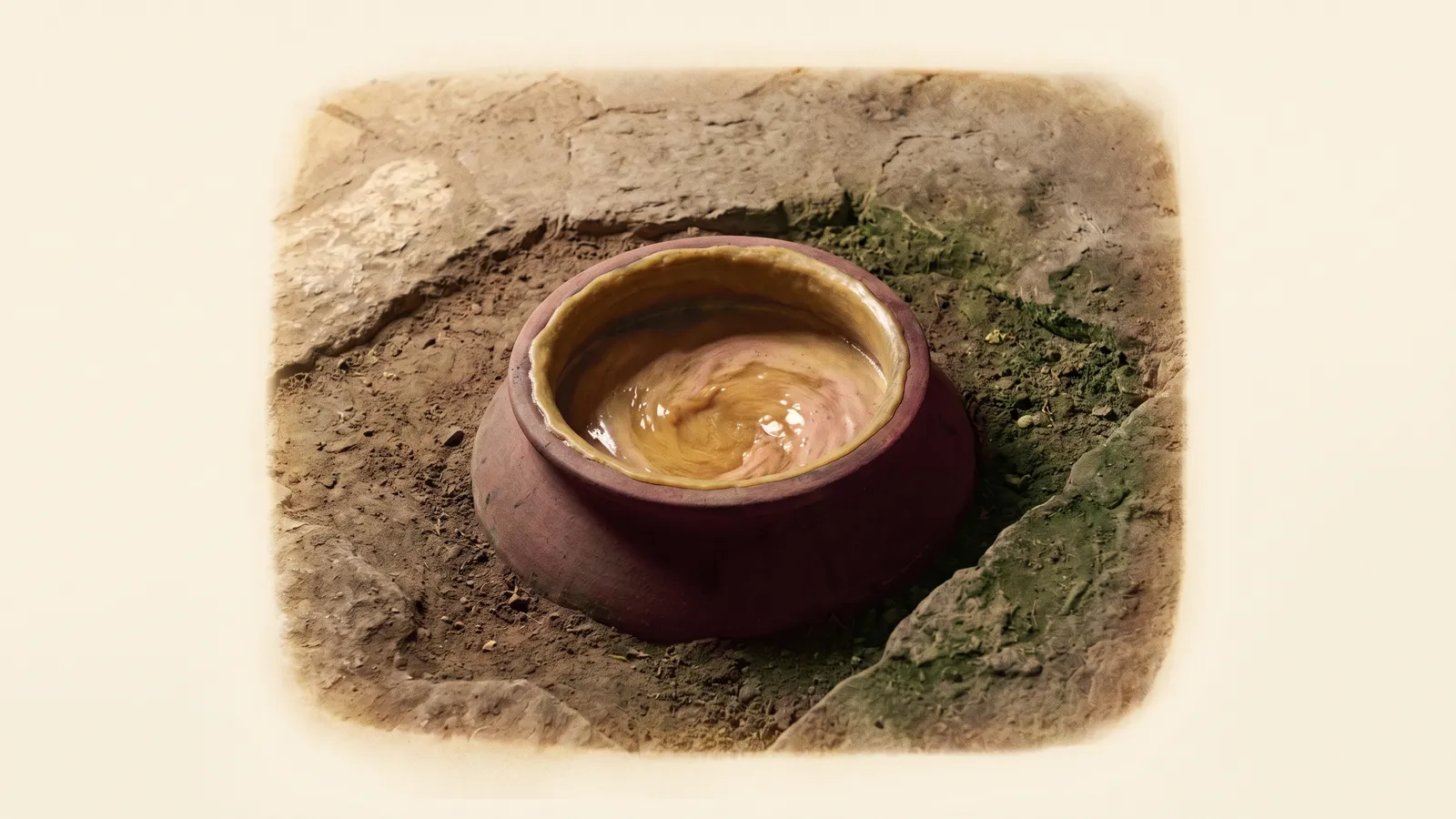
A qvevri is an egg-shaped clay amphora, lined with beeswax, buried in the earth up to its neck. Grapes go in — juice, skins, stems, and all. The earth maintains a cool, constant temperature. Fermentation happens naturally. After months, the wine is drawn off: amber-gold, tannic, layered with flavours that no stainless steel tank could produce.

In 2013, UNESCO recognised Georgia's qvevri winemaking as part of the Intangible Cultural Heritage of Humanity. By then, winemakers in Italy, Slovenia, and France had already started paying attention.

Georgian qvevri — egg-shaped clay vessel buried in earth for natural fermentation
A qvevri buried in earth — the 8,000-year-old vessel that started it all.

The Friulian pioneers

The modern orange wine movement started in the late 1990s in Friuli Venezia Giulia, the northeast corner of Italy that borders Slovenia. Two winemakers — Josko Gravner and Stanko Radikon — independently decided to abandon modern winemaking and return to extended skin contact.

Gravner went further than anyone expected. After visiting Georgia, he imported qvevri and buried them in his cellar floor. His Ribolla Gialla — a local white grape — spent months macerating on its skins in clay. The result was a wine that scandalized the Italian wine establishment: dark amber, tannic, oxidative, utterly unlike anything Friuli was known for.

Radikon took a similar path with longer macerations and no added sulphur. Both men lost customers, critics, and money. Both kept going. Within a decade, their wines were some of the most sought-after in Italy.

How it's actually made

The process is deceptively simple:

  1. Harvest white grapes — the same varieties used for conventional whites: Pinot Grigio, Ribolla Gialla, Sauvignon Blanc, Gewürztraminer, Rkatsiteli, Malvasia.
  2. Crush and leave the skins in contact with the juice — anywhere from a few days to several months. This is the key step. Red wine does this too; white wine doesn't.
  3. Ferment — often with indigenous yeasts, in clay, concrete, or old oak. Minimal intervention.
  4. Age — typically unfiltered, sometimes with extended lees contact.

The skin contact extracts phenolics — tannins and pigments — from the grape skins. This is what gives the wine its amber colour and its texture, which is closer to a light red than a crisp white. The longer the maceration, the deeper the colour and the more structured the wine.

What it tastes like

Tasting your first orange wine is disorienting. Your eyes see something that looks like amber ale. Your nose finds aromas you don't associate with white wine: dried apricot, bruised apple, tea, honey, hazelnut, and sometimes a savoury, almost meaty quality.

On the palate, there's grip. Tannin. A drying sensation you'd expect from a red. But underneath, the fruit character of the white grape is still there — stone fruit, citrus, tropical notes — just framed differently.

The best orange wines have a quality that's hard to describe: they taste ancient. Not old or tired, but timeless — as if the wine remembers something that modern winemaking has forgotten.

The spectrum, not the category

Not all orange wines are extreme. The spectrum runs from barely-tinted wines with just a few hours of skin contact (which some Alsatian and Austrian producers have been doing quietly for years) to deep amber wines with six months of maceration.

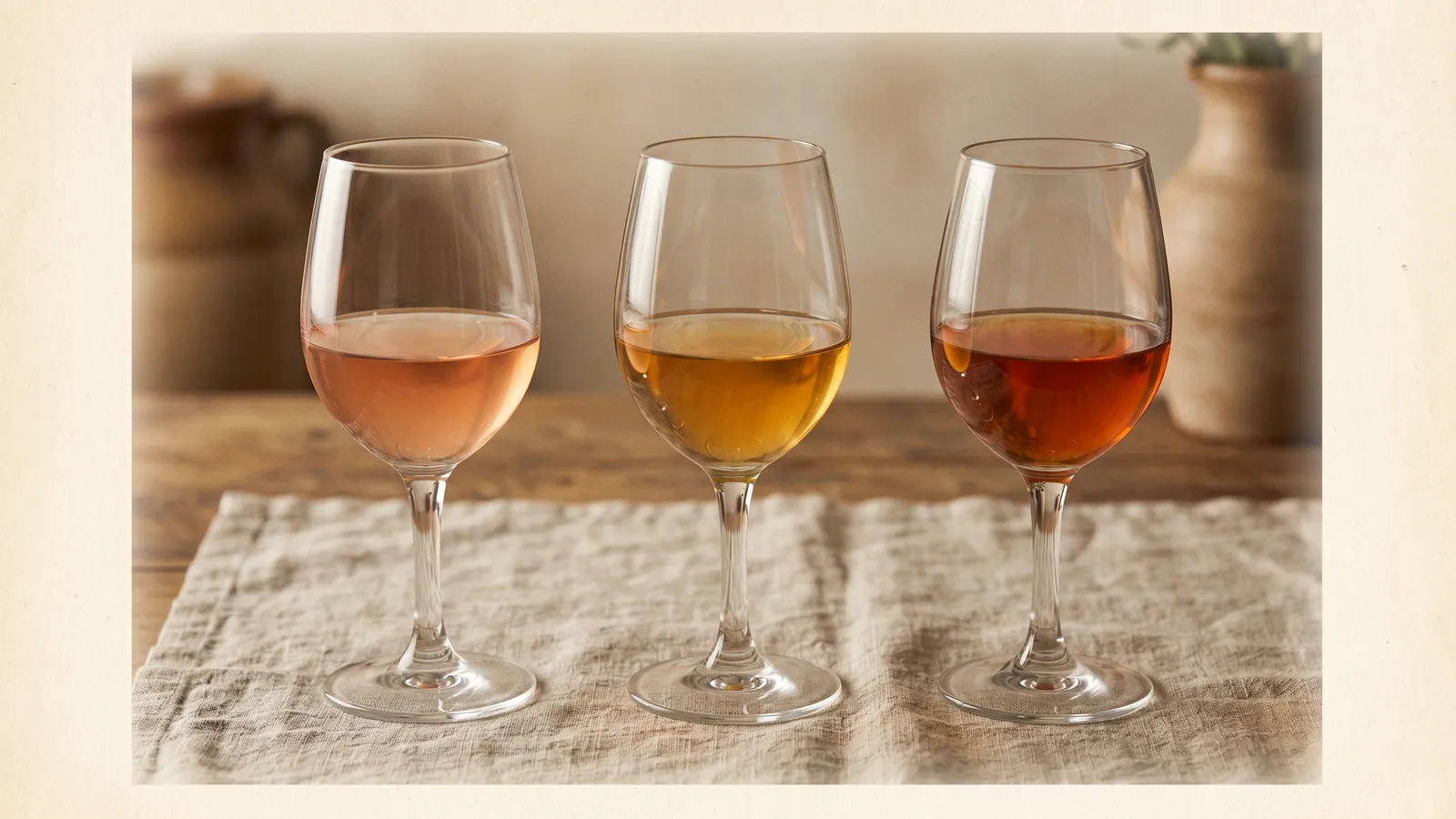
  • Short maceration (2–7 days): Pale copper. Adds texture and complexity without losing freshness. Easy entry point.
  • Medium maceration (2–6 weeks): Golden amber. Noticeable tannin. Tea and dried fruit notes emerge. This is where it starts tasting truly different.
  • Extended maceration (2–12 months): Deep amber to orange. Full tannin structure. Complex, layered, sometimes challenging. For committed drinkers.
Three glasses showing the skin-contact spectrum: pale copper, golden amber, deep orange
From a few days to several months of skin contact — the orange wine spectrum.

Why it matters

Orange wine isn't better than white wine. It's a different thing entirely — a fourth colour, a parallel universe of flavour. Its importance isn't about replacing anything; it's about expanding what wine can be.

It also matters because it asks a question that modern winemaking rarely confronts: what have we lost in the pursuit of consistency? The stainless steel revolution gave us clean, reliable, shelf-stable wines. But it also narrowed the range of what white wine could taste like. Orange wine reopens that range.

At its worst, orange wine can be funky, volatile, and murky — the winemaking equivalent of someone who won't stop talking about their gap year. At its best, it's one of the most profound and thought-provoking drinks on earth.


Pour it slightly cool — 14°C, not fridge-cold — into a wide glass. Pair it with foods that defeat conventional whites: curry, aged cheese, charcuterie, roasted root vegetables. And give it time. Orange wine rewards patience almost as much as the eight thousand years it took to come back.

© MMXXVI · Weinkinder Made with care, in burgundy.