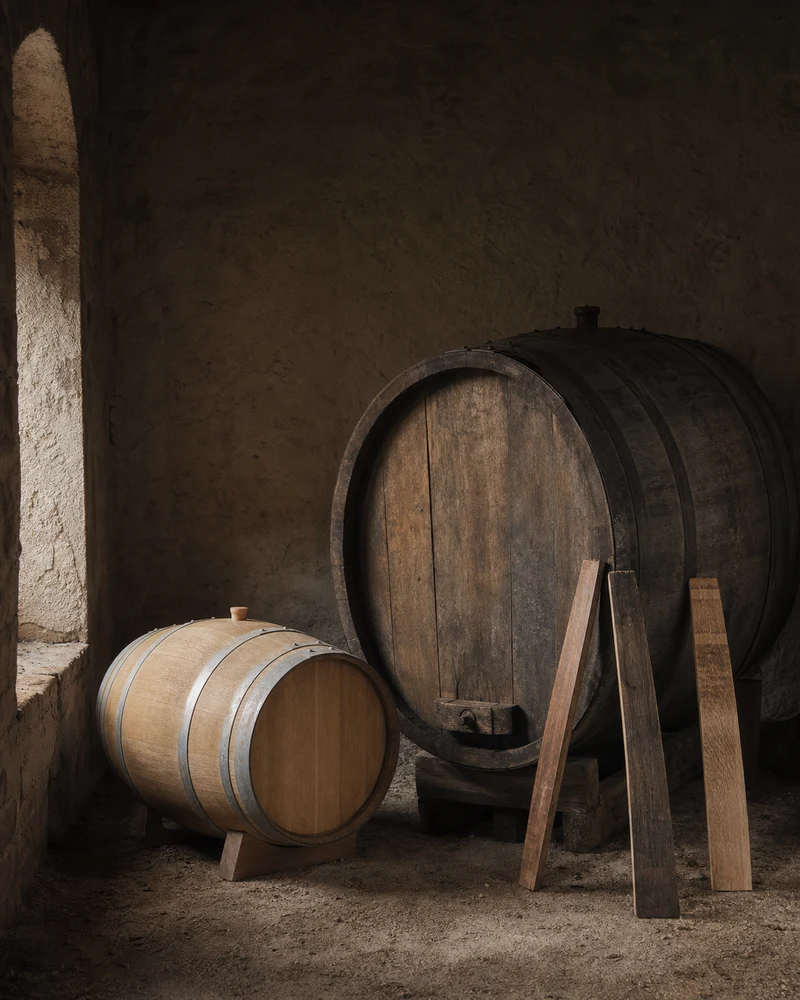
Vanilla is often the first clue that makes someone say, “This wine tastes oaky.” It is a useful clue, but it is only one note in a much larger chord.
Oak can suggest toast, cedar, clove, coconut, smoke, coffee, or sweet spice. It can also change how a wine feels: rounding edges, helping aromas knit together, and allowing measured contact with oxygen during maturation. Sometimes the oak stands at the front of the stage. Sometimes it is more like good lighting—you notice the wine, not the equipment.
The useful question is not simply Was oak used? It is What kind of oak choice was made, and how loudly does it speak?
Five dials, not one switch
Think of oak ageing as a panel with several dials.
Barrel age is the easiest to picture. A new barrel has more extractable wood compounds to give. After repeated fills, the barrel becomes more neutral. It can still act as a maturation vessel, but its flavour contribution usually fades.
Barrel size changes the ratio of wine to wood. In a small barrique, more of the wine sits close to oak. A large foudre gives much less wood contact per litre, so its influence can be quieter. Size does not rank quality; it changes the scale of the conversation.
Toast comes from heating the staves while the barrel is made. Different temperatures and durations transform compounds in the wood and shift the aromatic result. Light, medium, and heavier toast are not a simple ladder from delicate to powerful: the cooper’s technique, the wood, and the wine all matter.
Origin, species, and grain matter too. French, American, Hungarian, and other oaks are useful shorthand, but a flag does not predict a finished wine by itself. Forest, species, grain, seasoning, cooperage, and the individual barrel all influence what becomes available to the wine.
Finally, there is time. More months can mean more extraction, yet flavour does not rise forever in a straight line. Oak compounds change and integrate as the wine develops.
WSET’s introduction to oak offers a clear look at how barrels are made and why toast and time matter.
Wood contact and oxygen work together
A barrel is not only a wooden flavour source. It is also a vessel for slow maturation.
Small amounts of oxygen can enter during ageing through practical weak points around staves, closures, and cellar handling. Research summarized by IVES Open Science shows that barrel construction and contact between staves help determine oxygen transfer. This is controlled exposure, not the same thing as leaving an open bottle on the counter.
In red wine, gradual oxygen exposure can help colour and tannin evolve. In white wine, it may broaden texture and soften the divide between fruit, lees, and wood. The result depends on the wine’s structure and on how carefully oxygen is managed. Too much oxygen can flatten fruit and push a wine toward unwanted oxidation.
That is why two wines matured for the same number of months can feel very different. One may come from a small new barrel with a noticeable toast. Another may rest in a large, older cask that shapes texture while leaving little obvious wood aroma.
Oak is not butter
Oaked Chardonnay is often described as buttery, so oak and butter can seem like the same switch. They are not.
The buttery aroma is commonly linked to diacetyl, which may be produced during malolactic fermentation. In that separate process, bacteria convert sharper malic acid into softer lactic acid and can also affect aroma and mouthfeel. UC Davis explains the conversion and diacetyl’s role in its malolactic fermentation guide.
A winemaker may combine malolactic fermentation with oak, use either one alone, or use neither. Lees stirring can add another layer of creaminess. Ripe fruit can make the whole wine feel broader again. Your glass records several choices at once.
Read the clues in the glass
Try comparing an unoaked white with an oak-aged version of the same grape, such as Chardonnay. Do not hunt only for vanilla.
Ask four questions:
- Aroma: Do you find toast, spice, cedar, coconut, smoke, or coffee around the fruit?
- Texture: Does the wine feel broader, rounder, or more polished?
- Freshness: Does the fruit still feel vivid, or does maturation lead the impression?
- Balance: Does the wood frame the wine, or cover it?
Then look back at the label or producer notes. Barrel size, percentage of new oak, toast, and time may explain what you noticed—but producers do not always disclose every detail.
The best oak choice is not the one you can identify most quickly. It is the one that serves the intended wine. Sometimes that means a bold cedar-and-toast signature. Sometimes it means a large old cask whose work is almost invisible.
Next time “oaky” comes to mind, pause before naming one flavour. Listen for the whole chord: wood, air, time, fruit, and texture.